
Terminal and hangars
The passenger terminal, control tower and most hangars have modelled interiors.
EETN · Tallinn, Estonia Map
Microsoft Flight Simulator 2020 & 2024
Approach Tallinn along Lake Ülemiste, with the Estonian capital’s skyline just beyond the runway.
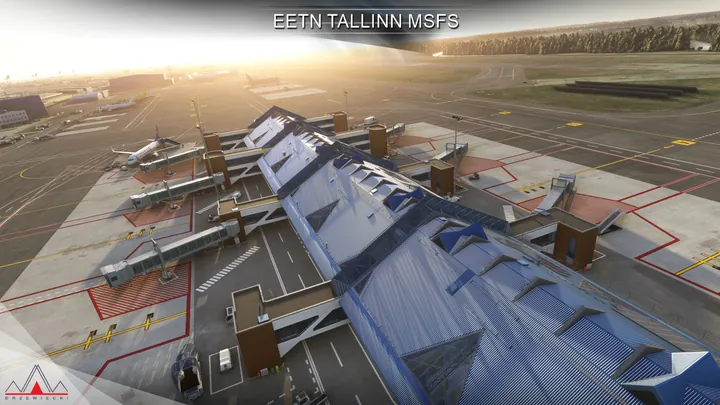
The passenger terminal, control tower and most hangars have modelled interiors.
Animated jetways, parked aircraft and custom sounds recreate the apron. Cartayna Files provide GSX Pro compatibility.
City landmarks, custom terrain, physically based materials and dynamic lighting extend the scenery beyond the airport.


Compatible with Microsoft Flight Simulator 2020 and 2024, and with Drzewiecki Design, Orbx and Asobo scenery.
Use the installer or scenery manager supplied by your retailer. If the installer offers scenery options, run it again to change them.
Lennart Meri Tallinn Airport (EETN) stands on the eastern shore of Lake Ülemiste, about five kilometres southeast of Tallinn’s medieval centre. The lake sits just beyond the western end of the runway. The passenger terminal, rail corridor and surrounding business district occupy the strip of land between the airfield and the city, with the Baltic coast a short distance farther north.
Construction began in 1932 and the airport officially opened in 1936. Its three short runways formed a triangle, giving early aircraft a choice of landing directions in changing winds. The single long runway familiar to later generations belongs to a different era. Jet passenger services arrived in the 1960s, and a new terminal was built for the period when Tallinn hosted the sailing events of the 1980 Moscow Olympics.
The airport grew into Estonia’s international gateway and an aircraft maintenance base. Beyond the passenger apron, large hangars accommodate aircraft for overhaul and painting. In 2009 the airport took the name of Lennart Meri, the writer and former Estonian president.


